
Many businesses treat a quick scan and a real penetration test as the same thing. They aren’t and that mix-up can waste budget while still leave a serious gap open.
For SMEs, compliance teams, and IT leaders in Pakistan the difference matters during audits, product launches and ransomware planning. A vulnerability scan finds known issues across systems fast. A penetration test shows whether those issues can be chained into a real breach and what damage could follow. Many tools produce long lists, but lists alone do not show business impact or weak internal controls.
Once you see that split the penetration test vs vulnerability scan decision gets much easier.
Penetration test vs vulnerability scan: what each one really does
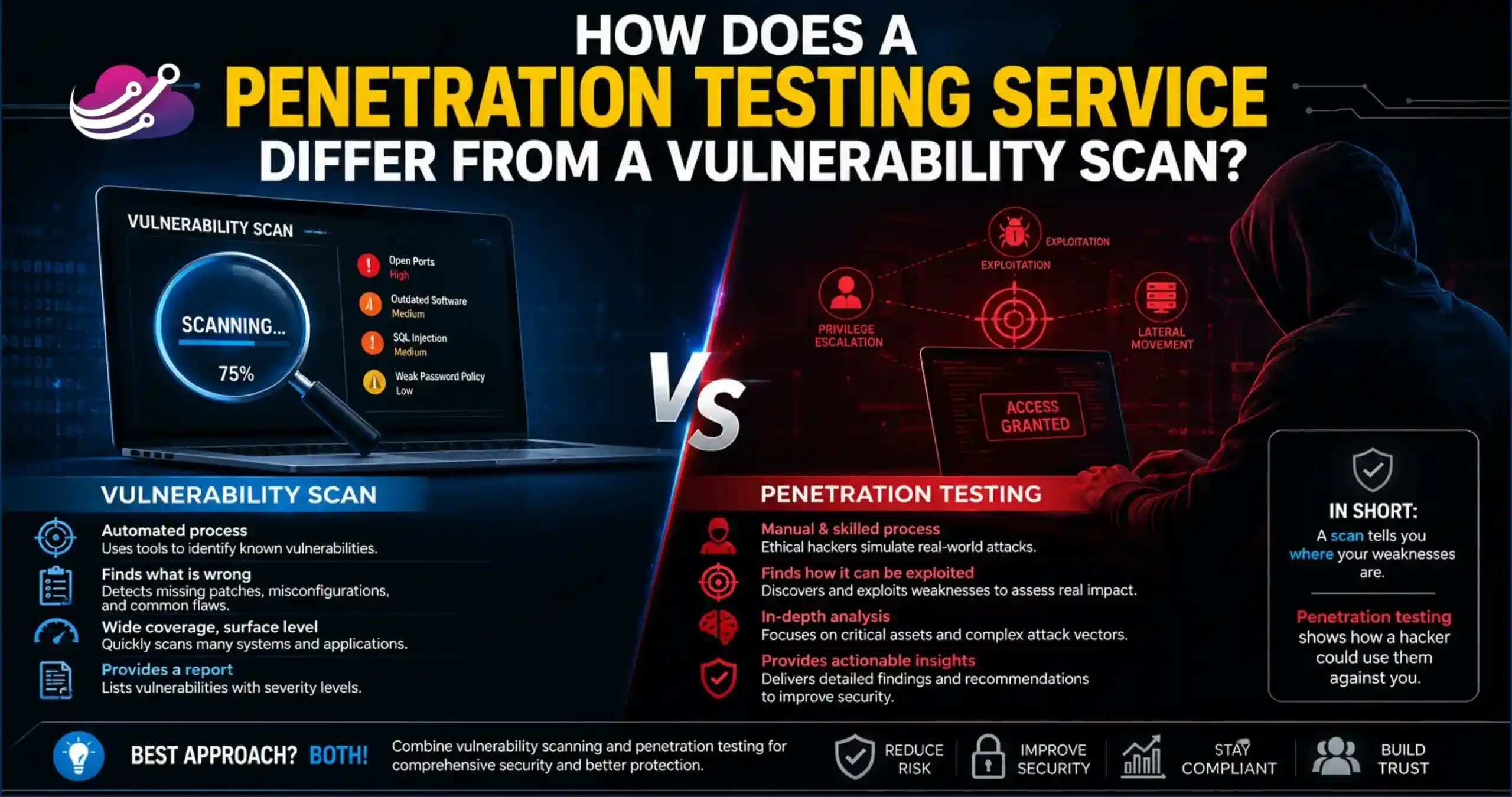
The simplest way to compare a penetration test and a vulnerability scan is to look at purpose. One checks for known weaknesses at scale. The other uses human skill to see whether those weaknesses lead to access, data loss or control.
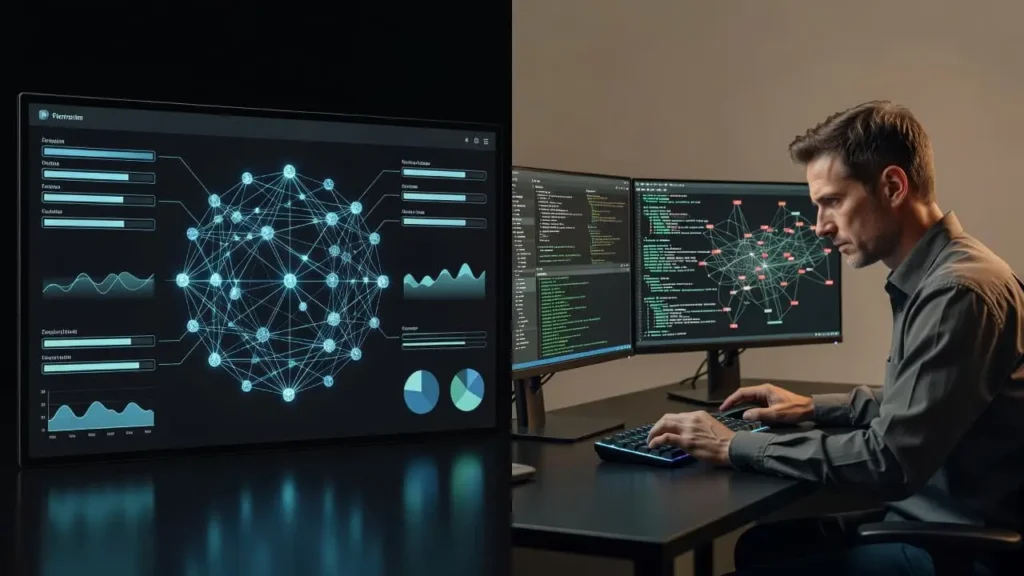
What a vulnerability scan finds and what it does not
A vulnerability scan is automated. A tool checks hosts, ports, software versions, missing patches and common misconfigurations against known weaknesses. Because it runs fast, teams can scan large networks, cloud assets and web apps on a routine schedule.
That speed is useful but the results need review. Some findings are false positives. Others are real yet low-risk in your setting. A scan also won’t usually show whether an attacker can exploit a flaw move to another system or reach payroll, email, or customer data. That is why security teams tune scan settings and verify the output. SecurityMetrics’ comparison of pentesting and scanning explains the same gap in plain language.
How a penetration testing service works in real life
A penetration testing service adds human judgement. Testers probe exposed services, weak passwords, poor access controls and unsafe web behavior. Then they try to chain those weaknesses together.
For example a tester might use a reused password to enter a VPN reach an unpatched server and pull sensitive files. That path matters more than a list of 200 findings because it shows real-world exposure. Manual testing brings context that an automated tool can’t. For companies in Pakistan, ZealsTECH is one option for structured testing that helps validate what an attacker could do inside the environment.
The biggest differences in results, depth and business value
Results matter more than labels. In vulnerability scanning vs penetration testing the output tells you what you are buying.
| Area | Vulnerability scan | Penetration test |
| Goal | Find known issues | Prove exploitable risk |
| Method | Automated tool | Human-led attack simulation |
| Output | Large list of findings | Verified attack paths and impact |
| Best use | Routine checks | Audit prep and high-risk changes |
A scan gives coverage. A test gives proof.
Speed, frequency and scope: why scans are broader but lighter
Because scans are automated teams can run them weekly or monthly across a wide environment. They are good for patch tracking, asset discovery and spotting old software after routine changes. They also help prove that patching work happened on time. Cost is usually lower so scans fit ongoing security hygiene.
Still, broad coverage can create a false sense of safety. A clean scan does not mean an attacker has no path in. It may only mean the tool did not detect an obvious known issue or the result needs manual review. That is why many compliance programs treat scanning as a baseline not the full answer.
Risk proof, attack paths and prioritization: where penetration testing stands out
Penetration testing stands out when leadership needs to know what could happen. A skilled tester can show whether weak segmentation lets one compromised laptop reach finance systems or whether a web flaw opens the door to admin access and ransomware spread.
That proof helps teams rank fixes by business impact instead of chasing a long spreadsheet. It also helps with budget planning, because the most dangerous path is rarely the longest list item. When firms need that level of evidence professional penetration testing services make more sense than scanning alone.
When to use vulnerability scanning, penetration testing or both
Most businesses need both. The right choice depends on timing, scope and the question you need answered.
Use a vulnerability scan for routine coverage and patch management
Use a vulnerability scan for routine coverage. It works well for weekly or monthly checks, asset discovery and follow-up after patch cycles or system updates. That regular rhythm is useful for small IT teams with limited security staff.
A simple example is a growing office network or public web app after routine changes. The scan can catch known issues fast and show whether patches landed. However it should sit beside logging, patch management and stronger testing not replace them.
Choose a penetration test when you need proof of real-world exposure
Choose a penetration test when you need proof of real-world exposure. That usually means before an audit after a major product launch before a payment system goes live or when incident response planning needs realistic attack paths. It also fits the moment when executives want to know whether a threat could reach customer data not whether a scanner found a CVE.
A good test makes urgency clear. Instead of handing over noise it shows which weakness matters first and why. If you are unsure how the process works what to expect from a pen test can help you set scope, timing and reporting expectations.
The right choice comes down to purpose
Vulnerability scanning and penetration testing solve different problems. Scans help you find known issues fast and keep pace with routine change. Pen tests show how those issues can be used in a real attack which makes risk easier to judge.
For most organizations the smart move is simple. Use scanning for ongoing visibility and use penetration testing for deeper validation, compliance and better risk decisions. Businesses in Pakistan that need expert help can turn to ZealsTECH for clear guidance and testing support built around real exposure not guesswork.
Frequently Asked Questions
1. What is the difference between penetration test vs vulnerability scan?
A vulnerability scan uses automated tools to find security weaknesses in a system. A penetration test goes further by simulating real attacks to see how those weaknesses can actually be exploited. One finds issues and the other proves real risk.
2. Is penetration testing better than vulnerability scanning?
Neither one is better on its own. A vulnerability scan helps with regular monitoring while a penetration test shows real attack impact. Most businesses need both for complete security coverage.
3. How often should a company perform penetration testing?
Most companies should do penetration testing once every year. It is also important after major system updates or infrastructure changes. High risk industries may need testing more often.
4. Can vulnerability scanning replace penetration testing?
No vulnerability scanning cannot replace penetration testing. It only detects possible issues but does not test how those issues behave in real attacks. Penetration testing is needed to confirm actual risk.
5. How much does penetration testing cost in Pakistan?
The cost depends on system size and complexity. Small systems cost less while large enterprise networks cost more because they require deeper analysis and more time.
6. What industries need penetration testing in Pakistan?
Industries like banking healthcare telecom e commerce and government need penetration testing. These sectors handle sensitive data and face higher cyber attack risks.
7. What is included in a penetration testing service?
A penetration testing service includes scanning systems finding weaknesses testing exploit paths and preparing a full report. It also includes guidance for fixing security issues.
8. Why is vulnerability scanning not enough for cybersecurity?
Vulnerability scanning only detects issues. It does not test how attackers can use them. It may miss complex attack chains that penetration testing can reveal.
9. What is penetration testing in cyber security used for?
It is used to simulate real cyber attacks on systems. This helps companies understand how secure their network applications and infrastructure really are.
10. How do I choose the best penetration testing service provider?
Choose a provider with strong technical experience clear reporting methods and knowledge of industry standards. They should also understand both network and application security testing.