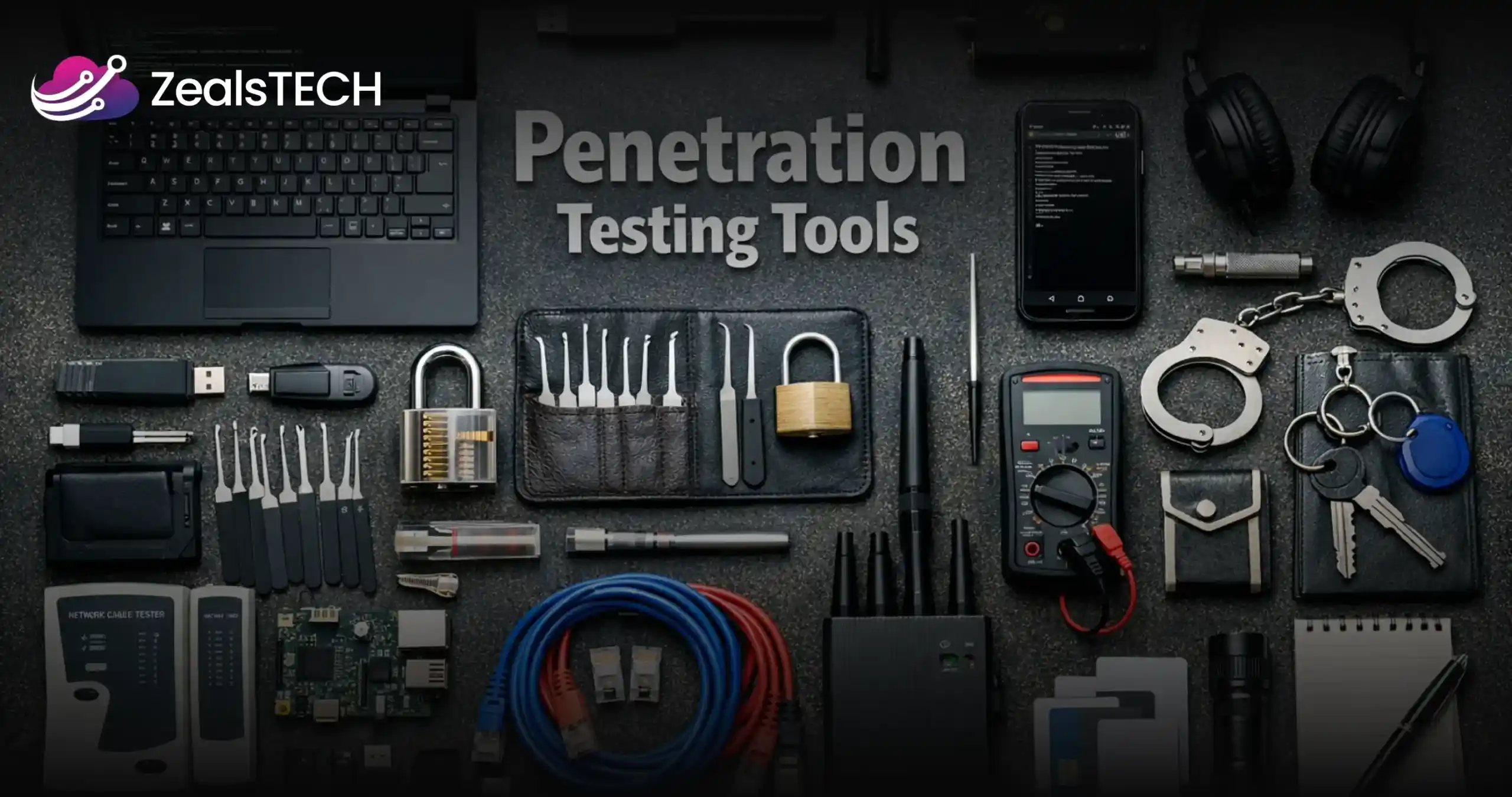

Professional testers don’t rely on one product and call it a day. They work with a toolkit for discovery, scanning, validation, exploitation, and reporting, because each stage answers a different question.
For IT managers, developers, and business owners comparing penetration testing tools in Pakistan, the options can feel noisy. Strong tools matter, but skill and process matter more. That is why many teams pair trusted software with local cybersecurity services from firms such as ZealsTECH. The right mix depends on what you run, whether that is a web app, network, cloud setup, or mobile app.
Start with the core penetration testing tools every team needs
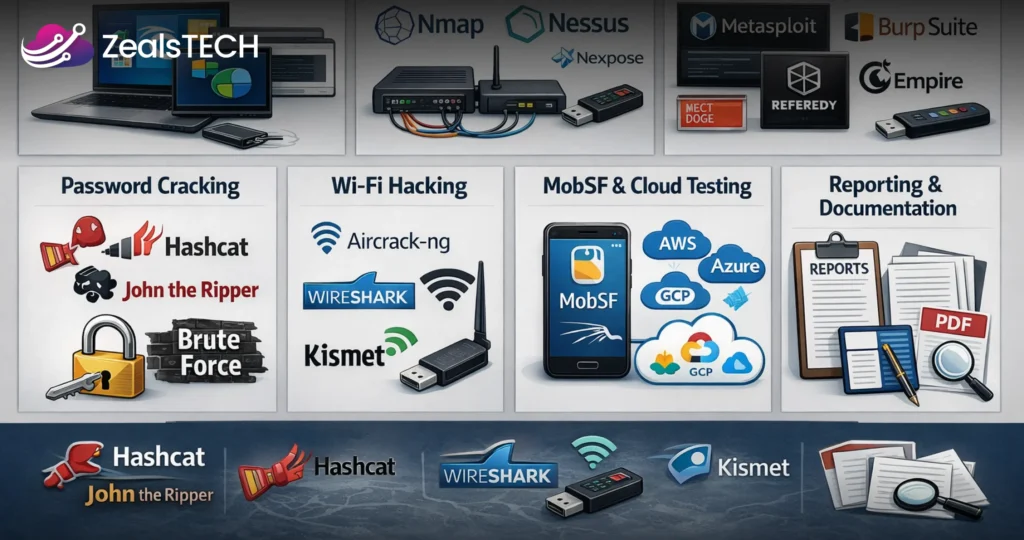
Most tools used in penetration testing fit into a few simple groups: mapping, traffic review, vulnerability scanning, exploitation, password testing, and reporting. These are the baseline pentest tools professionals use before they move into deeper manual work.
Nmap maps the network before deeper testing begins
Nmap is often the first stop. It helps testers find live hosts, open ports, exposed services, and signs of weak setup. In other words, it builds the map before anyone starts checking the doors.
That map matters for both internal and internet-facing systems. A tester can quickly see where remote access, old services, or odd ports may create risk. For teams planning network penetration testing, Nmap remains one of the best penetration testing tools because it turns a vague target into something clear and testable.
Wireshark helps testers see what traffic reveals
If Nmap shows the roads, Wireshark shows the traffic moving on them. It captures packets so testers can inspect how data moves between devices, apps, and servers.
That helps expose weak encryption, insecure logins, session leaks, or data sent in plain text. Scanners may hint at a problem, but packet analysis helps confirm it. For that reason, Wireshark is one of the tools used in penetration testing that adds proof, not noise.
Use specialized tools for web apps, mobile apps, and active testing
Once discovery is done, professional testers switch from broad visibility to hands-on validation. This is where pen test tools for apps, passwords, and cloud systems come in. Automation helps, but manual skill is what separates a real finding from a false alarm.
Burp Suite is a go-to choice for web application testing
Burp Suite is a well-known choice for web app work. It lets testers intercept requests, change parameters, replay traffic, and check how the app reacts under stress. That makes it useful for finding broken authentication, input flaws, weak session handling, and access-control issues.
It is one of the best-known web app penetration testing tools for both manual and semi-automated review. If your team needs focused application penetration testing, Burp is often part of the stack. Budget also matters, so many Pakistani buyers compare tool licensing with the wider web app penetration testing tools cost of a full assessment.
Metasploit and password tools help validate real risk
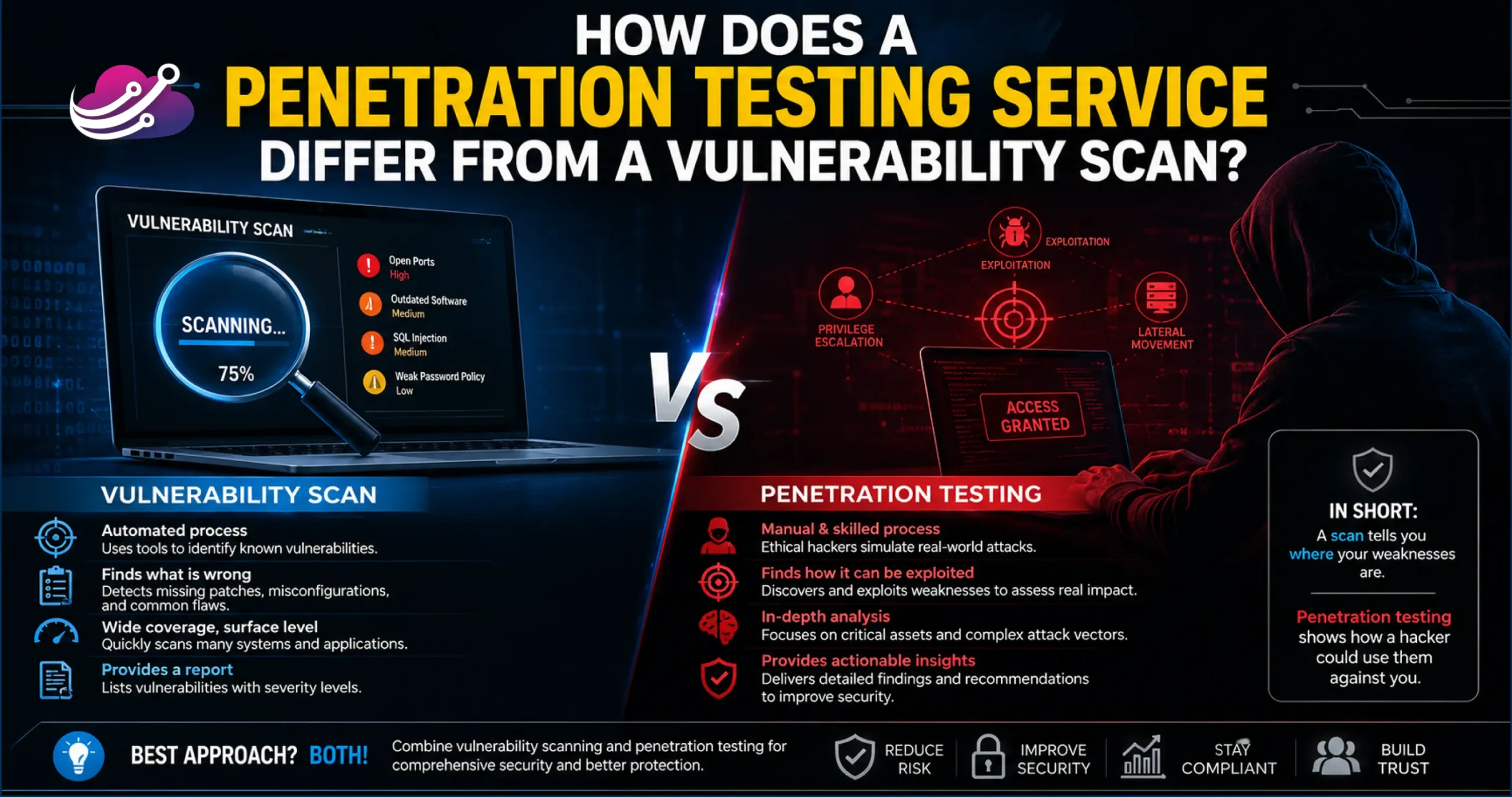
A scanner can say a weakness exists. Metasploit helps test whether that weakness can be used safely in scope. That difference is important, because risk is about impact, not guesses.
Password auditing tools such as Hashcat or John the Ripper serve a similar purpose. They test password strength, weak hashes, and bad credential habits. Used carefully, these pen test tools show whether poor passwords could open the door to larger compromise.
MobSF and cloud testing tools cover modern attack surfaces
Mobile apps and cloud systems need their own playbook. MobSF helps review Android and mobile app behavior, including insecure storage, weak app settings, and exposed secrets. Meanwhile, cloud penetration testing tools focus more on identity, permissions, storage exposure, and misconfigurations than simple port scans.
For Pakistani firms building Android apps or moving workloads to AWS, Azure, or hybrid setups, that difference matters. ZealsTECH helps businesses choose the right stack for these environments without drowning teams in tool-heavy jargon.
The best results come from skilled testers, clear reporting, and the right partner
Tools speed up the job, but they don’t finish it. The best penetration testing tools still need judgment, restraint, and a clear method. That is why penetration testing services often bring more value than a pile of software licenses.
Why good penetration testers do more than run scanners
Automated tools miss business-logic flaws, trust bad assumptions, and often create false positives. A human tester connects small issues into real attack paths. They also explain what the finding means for payments, customer data, or internal access.

A scanner can flag a flaw, but a tester proves whether it can hurt the business.
That is why many companies buy penetration testing services instead of relying only on free tools. Good reporting turns raw output into action.
How businesses in Pakistan should choose their toolset
Many buyers compare pen test tools in Pakistan by price alone. That is risky. A smart choice depends on the target type, compliance needs, in-house skills, reporting quality, and budget. A web app team may need Burp and API checks, while an enterprise network team may start with Nmap, packet capture, and password auditing.
Local context matters too. Businesses looking at penetration testing in Pakistan often want cost control, faster communication, and support after the report lands. ZealsTECH is a practical option for firms that want local help, plain-language reporting, and penetration testing services that fit real business risk.
Frequently Asked Questions about penetration testing tools
1. What are the best penetration testing tools for beginners in Pakistan?
A good starter stack includes Nmap, Wireshark, Burp Suite Community Edition, and OWASP-friendly learning paths. These give beginners a strong base in mapping, traffic review, and web testing. Still, even beginner penetration testing tools in Pakistan require legal scope, lab practice, and safe targets. Free software can teach a lot, but it can’t replace supervision or sound testing habits.
2. How much do web app penetration testing tools cost for Pakistani businesses?
Costs vary a lot. Some pen test tools in Pakistan are free, while commercial platforms charge per user or per feature set. The bigger cost often comes from the testing depth, report quality, and the people using the tools. If you’re comparing vendors, this guide on how to hire pen testing services in Pakistan helps you judge value beyond the license price alone.
Professional testers use a mix of network mapping, traffic analysis, web app testing, exploit validation, password auditing, and mobile or cloud-focused tools. No single product does the whole job well.
The practical takeaway is simple: judge penetration testing tools by accuracy, fit, and reporting quality, not by popularity alone. The right tool is the one that helps your team find real risk and fix it clearly.
3. Which pentest tools are essential for penetration testing services in Pakistan?
Essential pen test tools in Pakistan include Metasploit for exploits, OpenVAS for scanning, and Burp Suite for web apps. For penetration testing services Pakistan, combine them with local compliance checks. ZealsTECH integrates these for comprehensive audits.
4. Can ZealsTECH use cloud penetration testing tools?
Yes, ZealsTECH expertly uses cloud penetration testing tools like Pacu and ScoutSuite for AWS/Azure audits. As part of our cybersecurity services, we secure your cloud infrastructure against threats tailored to Pakistani businesses.
5. What are the top pen test tools in Pakistan for Android apps?
Top tools for Android penetration testing tools in Pakistan are MobSF (Mobile Security Framework) for static/dynamic analysis and Frida for runtime hooking. Pair with Drozer for API testing. ZealsTECH application testing services use these for secure mobile app pentests.
6. How do professional penetration testing tools improve cybersecurity services?
Professional tools like Nmap and Metasploit uncover vulnerabilities early, simulate real attacks, and ensure compliance. They enhance cybersecurity services in Pakistan by reducing breach risks by up to 70%. Partner with ZealsTECH for expert implementation via our penetration testing