
Cloud environments need deeper testing than traditional IT systems because risks spread across applications, APIs, identities, storage, virtual networks, containers, integrations and configurations.
The right approach depends on access level, business goals, architecture and assets. A website penetration testing service focuses on web applications authentication, business logic exposed forms endpoints and API connections. A network penetration testing service checks virtual networks, firewall rules, VPNs, ports, segmentation, routing and lateral movement. A mobile application penetration testing service matters when Android or iOS apps connect with cloud APIs user accounts storage tokens and backend services.
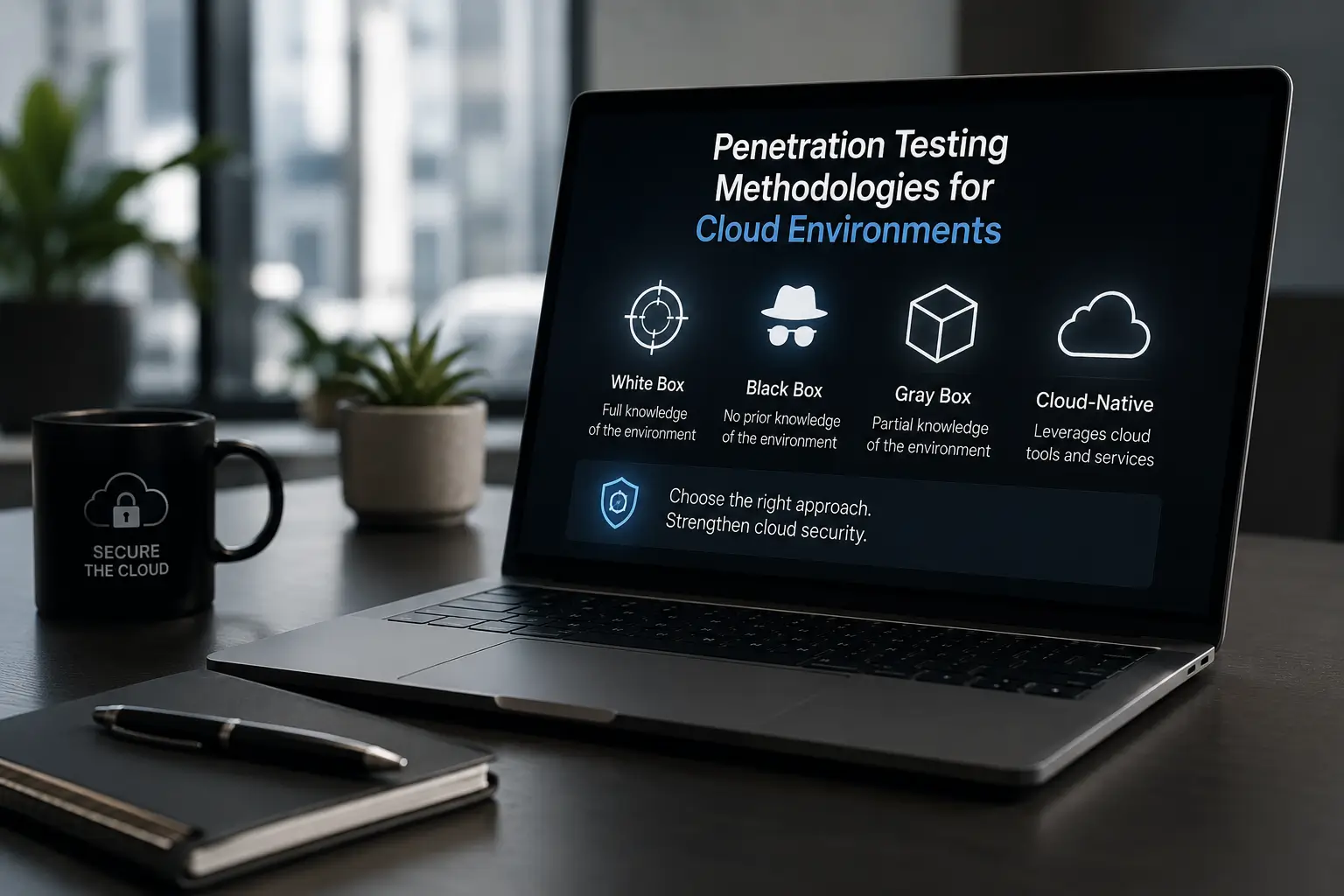
Cloud testing includes black-box, white-box, gray-box, configuration review, API testing, IAM testing and network-level testing. Some styles show what an outside attacker can see. Others expose internal risks weak permissions insecure architecture and misconfigurations. For companies using AWS, Azure, Google Cloud or hybrid platforms penetration testing in cyber security helps find vulnerabilities before
bushwhackers exploit them.
Introduction to Penetration Testing in Cloud Security
Cloud computing has changed how companies manage applications, data, networks, devices and systems. Businesses now use AWS, Microsoft Azure, Google Cloud, private cloud and cloud-based platforms to host websites, APIs, portals, databases and systems.
Cloud security follows the shared responsibility model. The provider secures the infrastructure, but the business remains responsible for application security API security, identity permissions storage settings access control encryption logging and configurations. This is where penetration testing in Pakistan becomes important for local businesses moving to the cloud without mature internal security teams.
Using a trusted provider doesn’t automatically make a cloud setup secure. Cloud platforms cannot automatically fix weak IAM roles, exposed APIs, public storage buckets, insecure applications, weak passwords, missing logs, or poor deployments. One exposed API can cause data leaks, downtime, financial loss and brand damage.
Cloud penetration testing identifies these risks, explains impact, prioritizes fixes and supports reliable cyber security services.
Why Cloud Environments Need Specialized Pen Testing?
Cloud systems are more complex than traditional IT systems. Cloud security includes identity permissions, storage policies, APIs, virtual networks, containers, databases, integrations, DevOps channels and provider-specific controls.
The biggest threat is misconfiguration. Even when the application code is secure, a public storage bucket, over-permissive IAM role, open security group, weak API policy, or exposed admin panel can cause serious exposure.
Specialized testing matters because standard website testing may detect login issues, but it can miss excessive permission vulnerabilities, weak segmentation, exposed storage, missing encryption and insecure deployment patterns. Pakistani companies using AWS, Azure, Google Cloud, or hybrid setups need testing across operations, APIs, IAM, storage, networks, databases, backups and monitoring.
A proper methodology shows how bushwhackers could enter, what they could access and the damage they could cause.
Overview of Key Methodologies
Cloud penetration testing can be done through multiple methodologies. Choosing the wrong methodology can leave major risks hidden, while choosing the right one can expose vulnerabilities before they happen.
The main methodologies include black-box testing, white-box testing, gray- box testing, configuration review, IAM testing, API testing, network-level testing and trouble-led testing. A simple cloud- hosted website may need black-box testing, while fintech, SaaS, or enterprise environments may need deeper architecture assessment.
This is why penetration testing in cyber security must be mapped to cloud maturity, data sensitivity, industry risk and business impact. Professional cyber security services help define the scope, validate findings manually and provide remediation guidance.
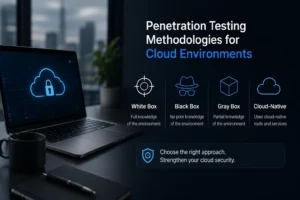
Black-Box Testing: Simulating Real-World Cloud Attacks
Black-box testing is a methodology where the tester has no internal access. The tester works like an attacker bushwhacker and tries to discover what’s publicly visible, accessible, or exploitable from outside the system.
This approach identifies external exposure across public websites, login portals, DNS records, public IPs, exposed APIs, admin panels, storage links and open services. For a Pakistani e-commerce company, black-box testing can reveal weak login pages, vulnerable forms, exposed portals, API flaws and public assets.
Its strength is realism and its limitation is depth. It does not provide visibility into IAM roles, private networks, internal configurations, source code, backend credentials, logging gaps, or infrastructure-as-code vulnerabilities. For cloud surroundings, black-box testing is a first layer, not a complete assessment.
How It Works for AWS, Azure and GCP
The core idea of black-box testing remains the same across AWS, Azure and Google Cloud: discover what’s visible from outside and test whether those assets can be exploited. The process starts with asset discovery, domain review, subdomain enumeration, IP review, login testing, API testing, storage exposure checks and service analysis.
Across these platforms, testers assess exposed web apps, storehouse endpoints, API gateways, identity access points, weak authentication flows and misconfigured security groups.
The tester looks for realistic entry points, such as open ports, insecure login pages, weak access controls, vulnerable APIs, exposed backups, or poorly configured resources. Serious programs use it as one part of a broader methodology, especially when comparing the best penetration testing service providers.
Pros Cons and Pakistan- Specific Use Cases
Black-box testing helps businesses understand how their cloud environment appears to an external attacker. It uncovers exposed login pages, vulnerable websites, public APIs, open ports, misconfigured services, weak authentication and publicly accessible assets.
The biggest advantage is realism. Since the tester has no internal access, the test reflects how a bushwhacker may approach the environment.
The weakness is limited depth. Black-box testing may miss excessive IAM permissions, weak internal segmentation, private storage misconfigurations, poor logging, backend access flaws, insecure deployment channels and architecture weakness. For Pakistani businesses using AWS, Azure, or Google Cloud, a strong penetration testing Pakistan strategy should combine black-box testing with configuration review, IAM testing and white-box testing when sensitive data is involved.
White-Box Testing Deep Code-Level Visibility for Cloud Apps
White-box testing provides deep internal visibility into the cloud application, source code, architecture, configurations, IAM policies, APIs, infrastructure-as-code files and sometimes CI/ CD pipelines. Unlike black-box testing, it examines how the methodology is constructed,
This methodology is important because numerous serious cloud risks are hidden behind the public interface. A website may look secure externally while the source code contains weak authentication, exposed secrets, insecure API calls, poor input validation, over-permissive roles, or weak access control rules.
White-box testing is useful for SaaS platforms, fintech systems, enterprise portals, e-commerce sites and cloud-native operations. For Pakistani companies serving enterprise clients or handling sensitive data, white-box testing can uncover deeper vulnerabilities before they become incidents. The limitation is that it requires further access, time and collaboration.
Adapting to Cloud IaC and APIs
In a cloud environment, white-box testing goes beyond the source code. It must also review the structure of Code, API logic, deployment pipelines, identity permissions and cloud configuration lines.
Infrastructure as Code uses files such as Terraform, CloudFormation, ARM templates, or Kubernetes manifests to define infrastructure. These files can introduce risks such as public storage access,over-permissive IAM roles, open portals, weak encryption, or missing logs. Testing IaC helps identify security problems before production.
APIs are another major area. Modern cloud applications use APIs for login, payments, dashboards, mobile apps, admin functions and integrations. White-box API testing reviews requests, tokens, authorization and backend abuse. For apps connected to cloud services, API testing should be part of a mobile application penetration testing service. White-box testing also strengthens a website penetration testing service by showing how the app communicates with storage, databases, APIs and identity services.
Best Penetration Services Provider for Pakistani Businesses
White-box testing is suitable for Pakistani businesses that handle sensitive data, online transactions, customer accounts, public APIs, or business-critical operations. It fits companies using AWS, Azure, Google Cloud, private cloud, or a hybrid infrastructure.
Fintech companies can review payment flows, API authorization, IAM permissions, encryption and database access. SaaS companies can test tenant separation, token validation and least-privilege roles. E-commerce businesses can assess checkout flows, security, payment integrations, uploads and client data storage.
This approach is useful for investors due to diligence, vendor reviews, enterprise onboarding, audits, or compliance readiness. For companies without strong internal expertise, white-box testing provides clearer remediation guidance.
Grey- Box Testing The Balanced Approach for Hybrid Cloud
Grey-box testing is a practical cloud penetration testing methodology where the tester receives limited internal knowledge or controlled access. This may include test accounts, API documentation, partial architecture details, role-based access, or limited visibility into settings.
It sits between black- box and white- box testing. Black-box testing gives no internal access. White-box testing gives full access. Grey-box testing gives enough access to test realistic attack paths without full source code or complete infrastructure visibility.
For Pakistani businesses, grey-box testing is often the strongest starting point. Many companies operate hybrid environments combining cloud platforms, on-premise systems, VPNs, internal applications, databases, integrations and legacy portals. Limited access allows testers to see how these systems connect and whether a compromise in one area could lead to deeper access.
Grey- box testing can identify broken access controls, weak API permissions, privilege escalation paths, insecure roles, exposed dashboards and poor segmentation. It gives further depth than black- box testing while staying further affordable than full white- box testing.
Integration with Network and Web Pen Testing
Grey-box testing is effective when integrated with web and network testing because hybrid cloud environments rarely operate in isolation. Websites connect with APIs, databases, storage, internal dashboards, VPNs, firewalls and backend services.
With limited credentials, testers can check weak session handling, exposed APIs, insecure file uploads, poor role permissions, broken access control and unsafe business logic in a cloud web application.
This makes grey-box testing practical for companies that need both a website penetration testing service and a network penetration testing service. It can show whether one weakness can lead to another.
Real- World Results and Compliance Benefits
Grey- box testing produces realistic results because it uses limited but meaningful access. Testers can assess how user roles, APIs, applications, networks and permissions work in real conditions.
For Pakistani businesses, this system can uncover weak authentication, exposed customer data, insecure API permissions, poor network segmentation, broken access control and misconfiguration. These findings are more useful than automated reviews because they show real operational impact.
Grey- box testing also supports compliance readiness. It doesn’t guarantee compliance, but it helps businesses prepare for customer security reviews, keep vendor assessments, data protection prospects and internal audits. A professional network penetration testing service can support hybrid reviews by checking exposed ports, weak firewall rules, insecure remote access, lateral movement paths, VPN weakness and segmentation gaps. For businesses balancing cost, depth and visibility, grey-box testing is a strong option within professional cyber security services.
Choosing the right methodology and the Top providers in Pakistan
The right methodology depends on business model, cloud setup, risk level, industry, budget and access requirements. A small cloud- hosted website may start with black-box testing and configuration review. An e-commerce business may need grey- box testing to assess client accounts, payment flows, API connections, storage exposure and admin access.
Fintech, SaaS, telecom and enterprise companies need deeper testing. This may include white-box testing, IAM review, API testing, threat- led testing, configuration assessment and broader cyber security services for cloud risk reduction.
Businesses should not choose a provider only because it is cheap. Low- cost testing often means automated scanning, generic reports, and little manual validation. A serious provider should understand AWS, Azure, Google Cloud, web operations, APIs, cloud networking, IAM warrants, mobile backends and remediation planning.
When comparing the best penetration testing service providers, businesses should evaluate methodology, cloud expertise, reporting quality, manual validation, consultation, remediation guidance and business understanding. Companies with mobile apps should include a mobile application penetration testing service because mobile apps often depend on cloud APIs, tokens, sessions, backend storage and identity systems.
Why Zealstech Excels as a Penetration Testing Provider
Practical, business-aware penetration testing from ZealsTECH rather than generic vulnerability reports. With AWS, Azure, Google Cloud, or hybrid infrastructure, it’s important to know how testing quality depends on understanding by understanding the cloud architecture, application risk, IAM permissions, APIs and business impact. For small businesses, black-box testing and configuration reviews may be suitable options to choose from, whereas for SaaS, fintech and enterprise teams, grey-box testing, white-box testing, API testing, IAM assessment and architecture review are more appropriate. However, Pakistani businesses that lack their own cloud security teams will benefit from ZealsTECH’s local market awareness, technical expertise and support in app-to-cloud communication, user authentication, handling of tokens, backend API validation and cloud data exposure checks.
Frequently Asked Questions
What is the difference between Black- box vs white- box cloud testing?
Black-box testing checks external exposure without internal access. It identifies public- facing pitfalls such as exposed login pages, vulnerable websites, open services, public APIs and misconfigured assets. White-box testing gives visibility into code, IAM policies, APIs, cloud architecture, infrastructure-as-code and configurations.
Cost of penetration testing in Pakistan?
Cost depends on the cloud platform, scope, access level, testing depth, reporting and remediation support. A basic website test costs less than a full cloud assessment.
Which penetration testing methodology is best for AWS?
Grey- box testing is often the most practical AWS starting point because it gives limited access to realistic attack paths. Sensitive environments may also require white-box testing and IAM review.
Mobile app testing for cloud apps?
Yes. Mobile app testing matters when apps connect with cloud APIs, accounts, tokens, storage and backend systems. Testing only the interface isn’t enough.
Cloud vs. on-prem network testing?
Cloud testing covers VPCs, VNets, security groups, IAM permissions, firewalls, VPNs, exposed services, storage access and hybrid connections. On- prem testing focuses on local servers, internal firewalls and office networks.
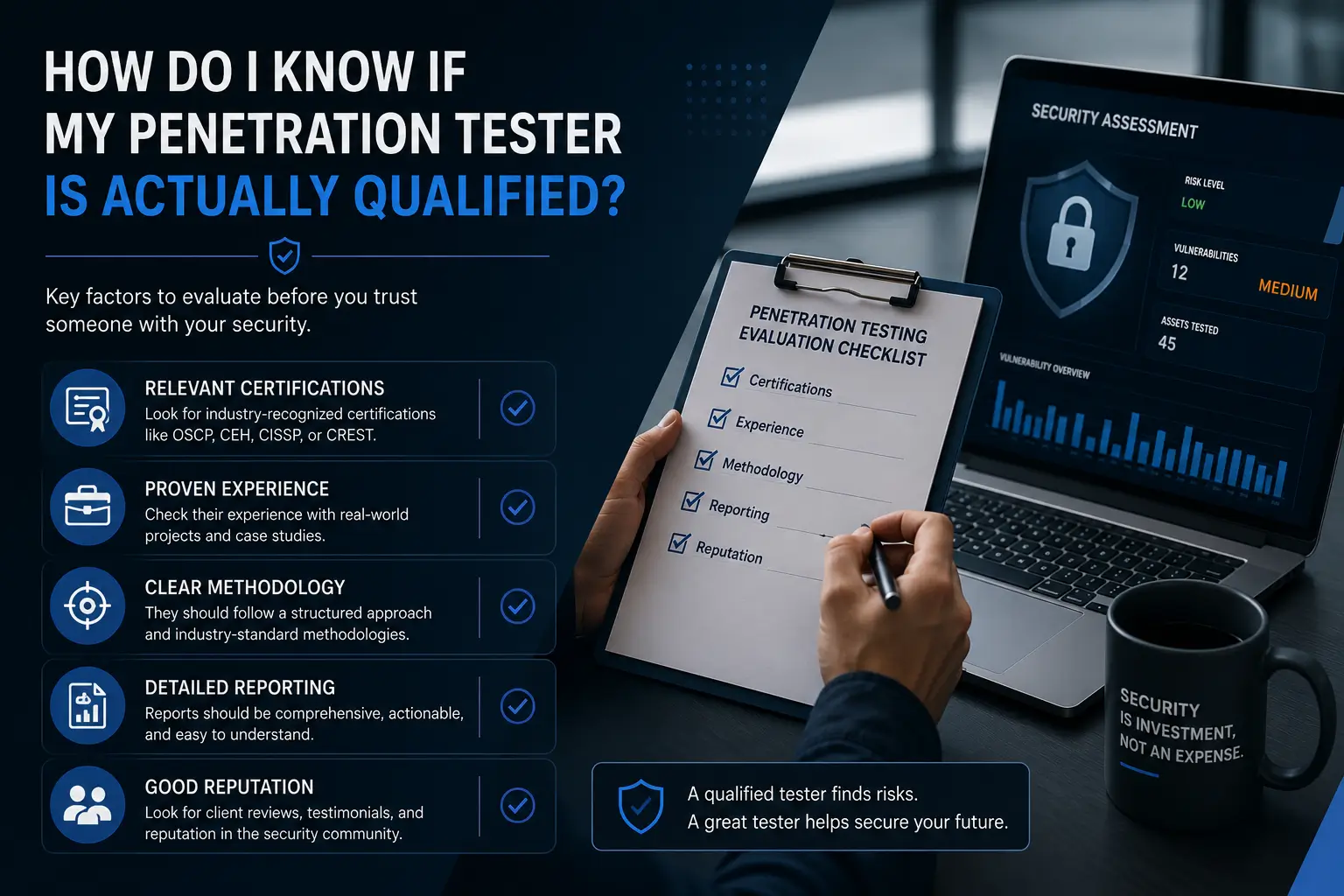
How do you choose the best penetration testing provider?
Choose a provider with cloud expertise, manual testing, evidence-based reporting, remediation guidance and post-test consultation.
Businesses need a methodology that matches their risks, applications, APIs, identities and networks. When done duly, penetration testing in cyber security helps organizations find real risks, reduce exposure and protect customers.