
As more Pakistani businesses move payments, customer records, and operations online, cyber risk grows with them. A small flaw in a website or VPN can open the door to fraud, data theft, or ransomware. That is why penetration testing matters.
This article explains what it is, how it works, and why SMEs, startups, and larger firms in Pakistan should care. It also covers local issues, from phishing and weak web apps to exposed servers and cloud mistakes, and shows how the right test can find them before attackers do.
What penetration testing is and how it helps find real security gaps
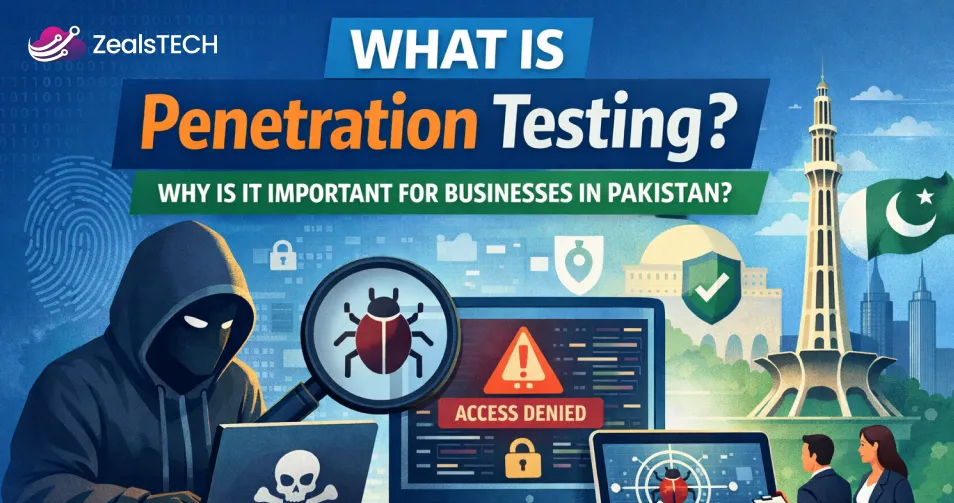
Penetration testing is an authorized security test. Trained experts try to break into your systems in a safe, controlled way. They think like attackers, but the goal is to help your business.
A basic scanner flags known issues. A hands-on test goes further. It checks whether those flaws can actually be chained together to reach data, accounts, or core systems. That is why many firms treat penetration testing services as more than a routine security audit. They are a practical form of ethical hacking with business context.
How a penetration test works from scoping to final report
First, the team agrees on scope, targets, timing, and rules. That could include a website, API, office network, cloud tenant, or employee app. Next, testers map the attack surface and look for flaws. Then they try safe exploitation, validate what is real, and rate the risk.
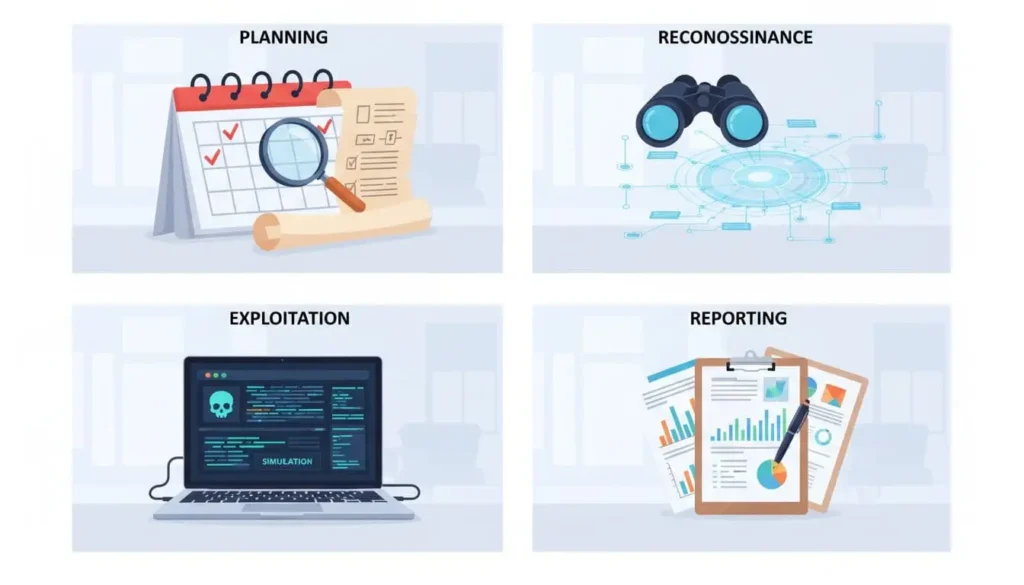
A good report does more than list bugs. It shows likely impact, such as account takeover, payment fraud, or server access. It also gives clear fixes, proof of findings, and, in many cases, a re-test after remediation.
The main types of penetration testing businesses in Pakistan should know
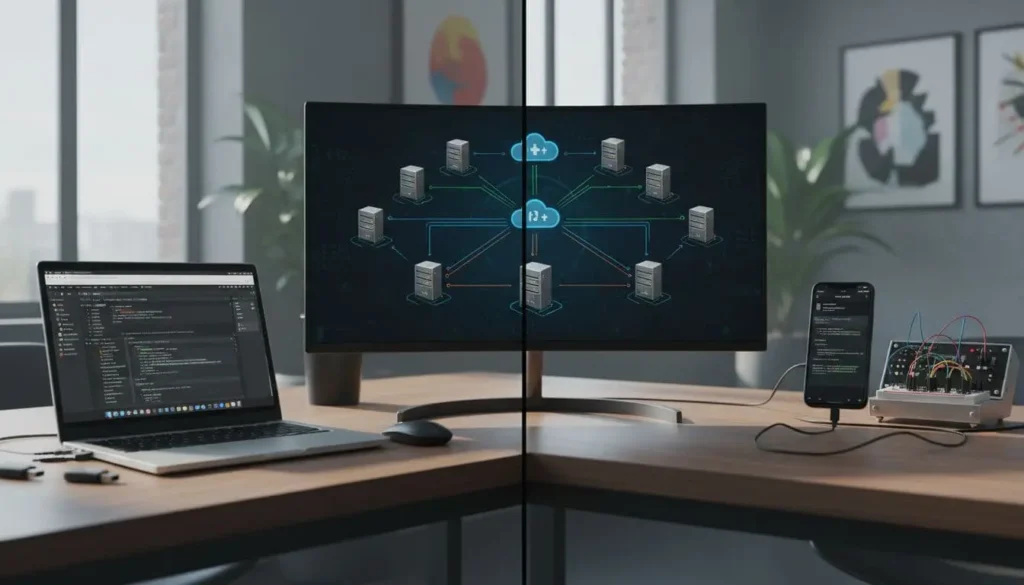
The common types of penetration testing depend on what your business runs. Network penetration testing checks firewalls, VPNs, office networks, and exposed services. Web app and API tests focus on logins, sessions, and access control. Mobile app penetration testing fits fintech, delivery, and health apps. Infrastructure penetration testing reviews servers, cloud setups, and identity controls. External penetration testing looks at what attackers can reach online, while internal penetration testing shows what a stolen staff account could do inside your environment.
An e-commerce brand may need web application pentesting and API review, while a factory with remote sites may start with network penetration testing services. Businesses that want a wider view can compare options through professional penetration testing services.
Why penetration testing is important for Pakistani companies
Pakistan’s business scene is moving online fast. Startups launch quickly, SMEs rely on outsourced development, and many teams still support remote work. At the same time, in-house security staff are often limited. So, the benefits of penetration testing are practical. It helps firms cut risk, protect trust, and make smarter security choices before growth creates bigger problems.
How penetration testing protects revenue, trust, and compliance
A breach rarely stops at stolen data. It can pause sales, trigger chargebacks, damage partner trust, and pull teams into recovery work for days. For fintech, retail, logistics, and healthcare, downtime alone can be expensive.
Penetration testing helps management see where money and reputation are exposed. It also supports client due diligence, internal governance, and audit readiness. When paired with comprehensive cybersecurity services, it becomes part of a broader risk program, not a one-time task.
The real value is simple: find the hole before an attacker turns it into a bill.
What threats local businesses often miss until a pentester finds them
Many problems hide in plain sight. A pentester may find an admin panel exposed to the internet, weak password rules for staff, old plugins in a WordPress site, or an insecure API that leaks customer records. In other cases, the issue is a public cloud bucket, an unpatched VPN, or shared admin accounts that no one reviews.
These are common in growing SME setups across Karachi, Lahore, and Islamabad, especially when systems were built fast or by several vendors. Here, the benefits of penetration testing become very clear, because it turns vague worry into specific action.
How to choose the right penetration testing services in Pakistan
Buying a pen testing service can feel like hiring a mechanic for a car you can’t open. Decision-makers need plain answers. A good provider should define scope clearly, get written authorization, protect your data, and explain findings in business language, not only technical terms.
Ready To Secure Your Websites Now?
Contact ZealsTECH today for expert penetration testing services in Pakistan.
Get a free consultation, clear scope, and actionable insights to safeguard your business.
What to look for in a professional pen testing provider
Start with method and people. Ask how the team tests web apps, APIs, networks, and cloud systems. Request a sample report. Check whether findings include business impact, remediation advice, and executive summaries for leadership. Also ask who will do the work, not just what tool they run.
Local context helps too. A provider that understands common SME environments in Pakistan can scope better and communicate faster. If you need help after the test, managed cybersecurity support can close the gap between finding issues and fixing them.
What penetration testing usually costs in Pakistan and what affects the price
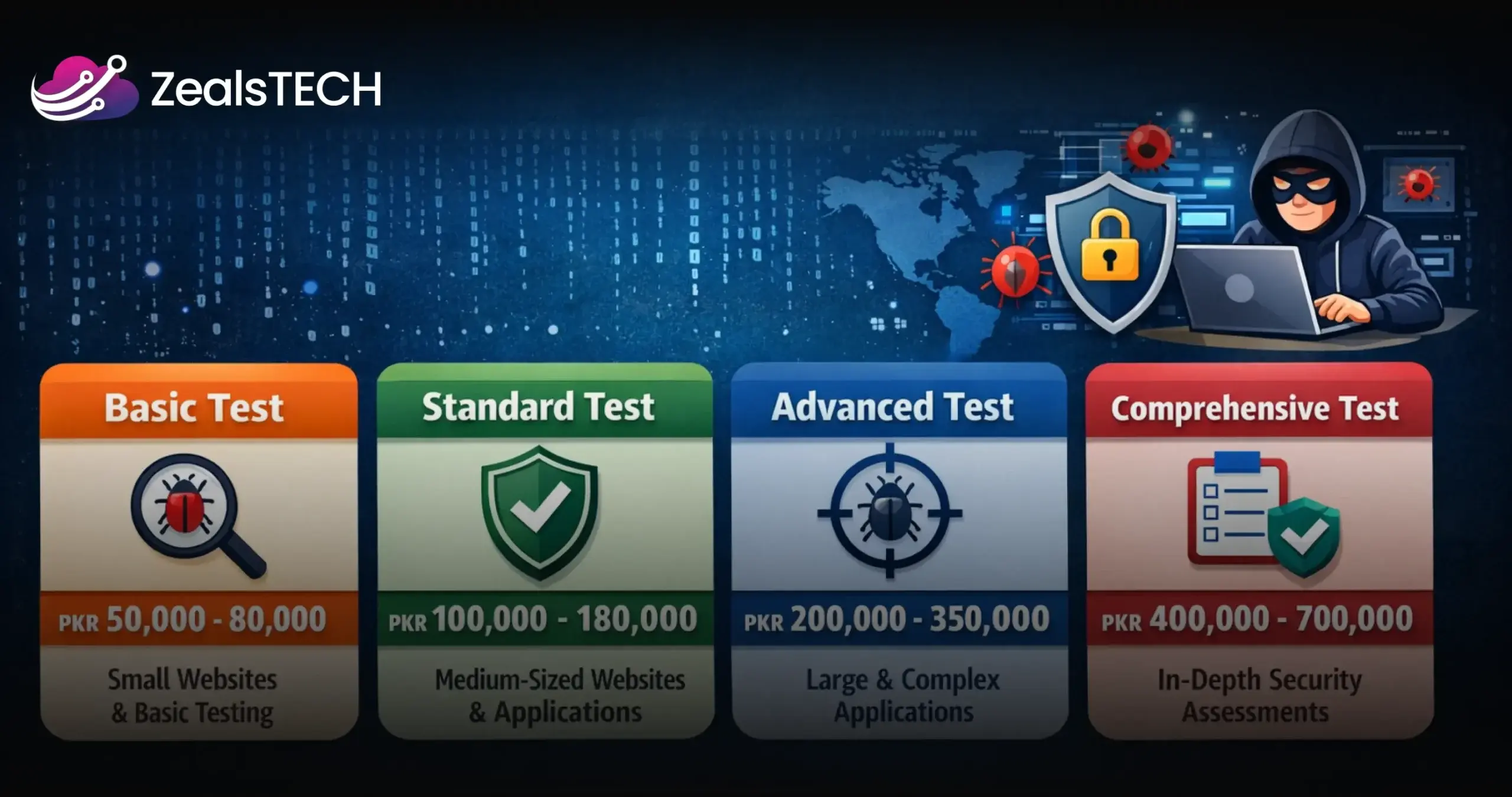
Penetration testing cost depends on scope, not on a flat menu. A small external test for one site costs far less than a deep review of several apps, APIs, cloud assets, and office networks. Price also changes with testing depth, asset count, reporting detail, and whether re-testing is included.
For many SMEs, web app pentesting is the most common starting point because customer traffic hits those systems first. Still, the cheapest quote can miss serious risks if the scope is rushed or the report is weak. Buyers should compare depth, deliverables, and follow-up, not only price. For firms that want a broader IT partner, ZealsTECH IT services can support both testing and the next steps.
Tools and skills behind a strong penetration test
Good results come from skilled people using trusted tools. Tools help spot patterns and speed up testing, but they don’t replace judgment. A strong pentester knows when a scanner is wrong, when a low-risk issue becomes serious, and how separate flaws combine into real business impact.
Common tools professional testers use during web, network, and API assessments
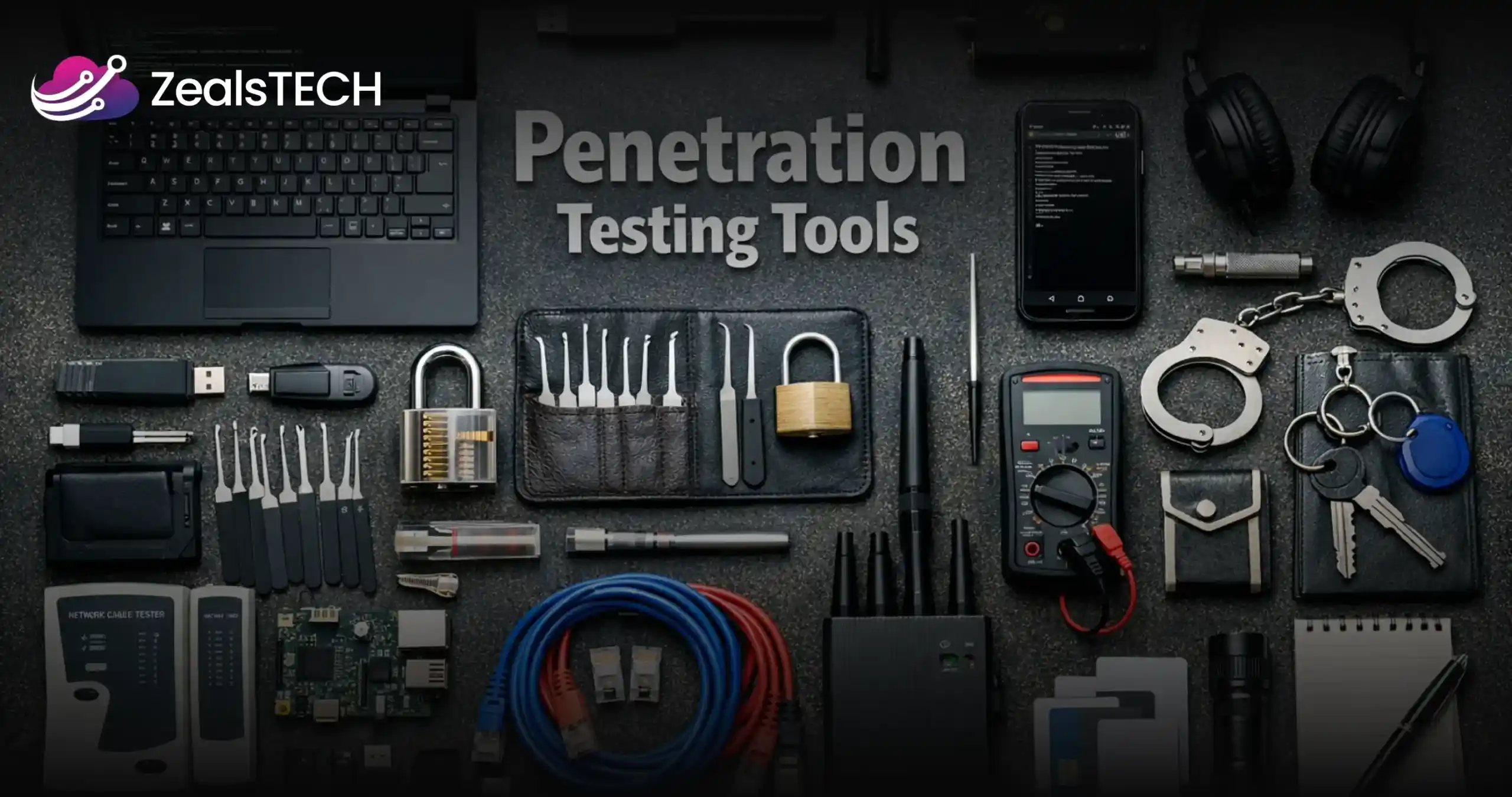
Well-known tools include Burp Suite for web testing, Nmap for host discovery, Nessus for vulnerability scanning, Wireshark for packet analysis, and Metasploit for safe exploitation and validation. Password auditing tools can also show weak credential habits.
These tools matter, but context matters more. A scanner may flag fifty issues. A good tester explains which three could actually hurt your business.
Application Penetration Testing Service
An in-depth exploration of your web and mobile applications to identify vulnerabilities and help secure them before attackers do. Our team performs thorough testing to ensure your application is robust against common security threats.
Network Penetration Testing Service
We perform comprehensive testing on your network infrastructure to identify vulnerabilities such as misconfigurations, weak points, and exploitable flaws. Our service helps businesses ensure that their network is secure from unauthorized access and attacks.
Which penetration testing certifications build trust in the market
Certifications can help buyers judge training and commitment. Common names include OSCP, CEH, CompTIA PenTest+, GIAC, and CREST-aligned paths. A solid penetration testing course background is useful, but it is not a guarantee of quality on its own.
Real project work still matters most. Ask whether the tester has handled web apps, networks, cloud systems, and API-heavy products like yours. Clear communication and clean reporting often tell you more than initials after a name.
As more Pakistani firms move online, small security gaps can become big business losses. Penetration testing helps you find real weaknesses before attackers do, protect customer trust, and spend security budgets more wisely. Start with the systems that handle payments, customer data, or public traffic, then expand from there. The sooner you test what matters most, the easier it is to fix problems while they are still manageable.
ZealsTECH has a certified team of penetration testing professionals with expertise in handling web apps, networks, cloud systems, and API-heavy products. Our team ensures thorough and reliable testing to help protect your business from cyber threats. Learn more about our services at ZealsTECH.
Frequently Asked Questions
1. What is penetration testing and how does it differ from regular security checks?
Penetration testing simulates real attacks to exploit vulnerabilities, unlike automated scans that only flag issues. It provides proof-of-concept risks tailored for Pakistani businesses.
2. What are the main types of penetration testing for businesses in Pakistan?
Key types include network penetration testing, web app pentesting, mobile app penetration testing, internal/external penetration testing, and infrastructure penetration testing-ideal for local networks and apps.
3. How much does penetration testing cost for a small business?
Penetration testing cost in Pakistan starts at PKR 200K for basic scopes, up to PKR 2M for comprehensive tests. Factors like app complexity and duration affect pricing.
4. Why do Pakistani companies need network penetration testing services?
With 40% of local breaches targeting networks (PTA data), network penetration testing services uncover firewall gaps and insider risks, preventing costly downtime.
5. What benefits of penetration testing can help with PDPA compliance?
Benefits include vulnerability exposure, regulatory proof via reports, and cost savings-ensuring PDPA adherence and avoiding fines up to PKR 50M.
6. How to choose a reliable pentester or pen testing service provider?
Look for certified pentesters, clear scopes, NDAs, and business-friendly reports. Providers like ZealsTECH offer tailored penetration testing services with local expertise.